


_1765201068552.png)
Improving Compound Solubility with Alpha-Cyclodextrin: Mechanisms and Applications
Alpha-cyclodextrin makes chemicals easier to dissolve in a number of fields. It is a circular oligosaccharide with six glucose units that forms host-guest inclusion complexes that make active substances that don't dissolve easily much more bioavailable and stable. Bulk alpha-cyclodextrin powder helps people who make medicines, supplements, useful foods, and cosmetics fix problems with their formulations. Because it's shaped like a truncated cone and has a hydrophobic interior and a hydrophilic exterior, it can hold tough substances. This makes it essential for B2B buying experts who need standard, high-quality, useful components.
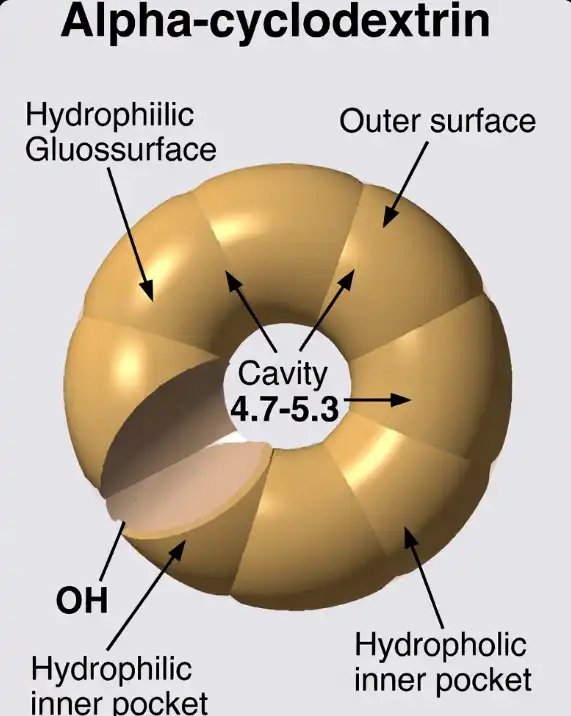
Understanding Alpha-Cyclodextrin and Its Molecular Mechanisms
The chemical structure of alpha-cyclodextrin makes it more soluble. This cone-shaped cyclic oligosaccharide is very interesting. It is made up of six glucose units connected by alpha-1,4 glycosidic bonds. The hydrophilic surface helps water spread out, but the hydrophobic space inside is 4.7 to 5.3 angstroms wide. Because alpha-cyclodextrin is two different things at once, it can hold other molecules in its hollow.
Inclusion groups are made by non-covalent interactions like hydrogen bonds, van der Waals forces, and hydrophobic links. A molecule that doesn't dissolve well in water is protected from it in the cyclodextrin pocket, which makes it seem like it dissolves better. This method works well for drugs that are lipophilic, volatile, and break down quickly.
Comparative Advantages Over Other Solubility Enhancers
Beta-cyclodextrin and other solubilizing agents are not as good as alpha-cyclodextrin. Because it has a smaller opening, it works well with straight aliphatic chains and guest molecules with low molecular weight. Because its molecular weight is 972.84 g/mol, it dissolves better in water than beta-cyclodextrin, which is 12.7 g/100 ml at 25°C.
The chemical can be used in high-temperature processes because it doesn't break down until it reaches 270°C. Its resistance to amylase breakdown makes it useful for oral transport methods. Alpha-cyclodextrin is safe for use in food and medicine according to the EU Novel Food and USP, EP, and FCC standards.
Key Technical Parameters and Quality Standards
For skilled buying, you need to know about technology requirements. The test results for dry bulk alpha-cyclodextrin powder stay between 98.0% and 102.0%, which means that performance will be the same from batch to batch. Standards set strict limits on bacterial, heavy metal, and leftover liquid levels. In GMP-certified plants, HPLC analysis checks for purity, and optical methods check for structure. With these quality rules, cyclodextrin-based products meet the requirements for FDA approval, REACH certification, and ISO certification.
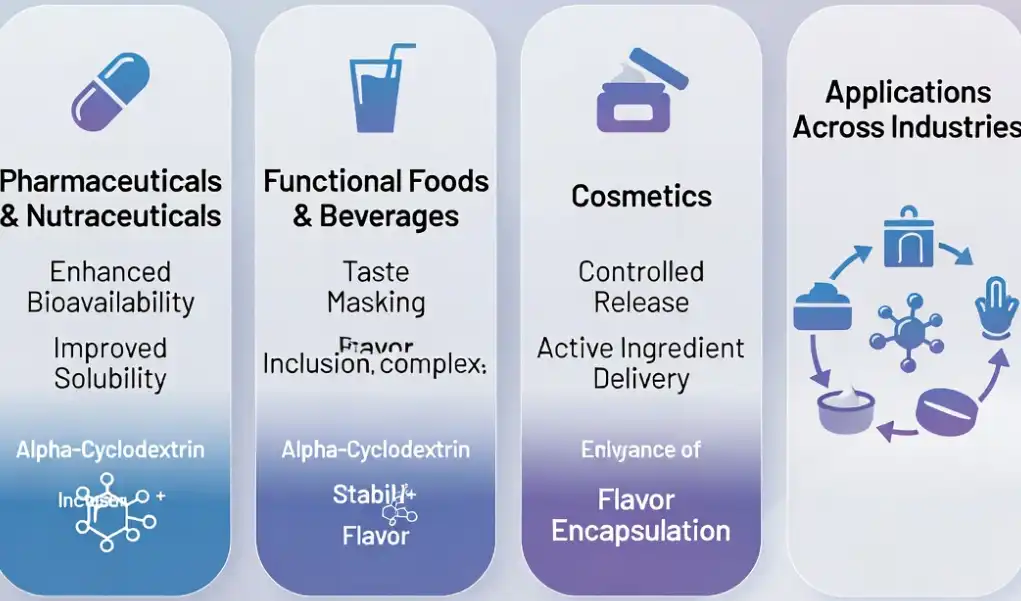
Applications of Alpha-Cyclodextrin in Improving Solubility for B2B Sectors
The solubility-enhancing properties of alpha-cyclodextrin are used by many businesses to solve manufacturing issues. By knowing these uses, R&D leaders, product managers, and formulation scientists may be able to come up with new products and make them stand out.
Pharmaceutical and Nutraceutical Applications
Alpha-cyclodextrin is used in pharmaceutical research to make drugs more bioavailable. Weakly water-soluble active pharmaceutical chemicals are hard to absorb and don't always work as expected in therapy. By forming combinations with these drugs, alpha-cyclodextrin increased their oral absorption and stability. This process is good for botanical products, polyphenols, flavonoids, and other ingredients in nutrition supplements.
Nutraceutical makers can benefit from using alpha-cyclodextrin to stabilize active chemicals that are sensitive. Antioxidants, chemicals that boost the immune system, and anti-inflammatory plants are lost during processing and storage. Protecting food physically in cyclodextrin holes makes it last longer and work better. The compound's soluble fiber status and low glucose affect back up claims that it can help with weight loss and digestive health.
Functional Food and Beverage Innovations
Food experts and product makers have to deal with issues like ingredient safety, taste matching, and processing conditions. These problems can be solved by alpha-cyclodextrin, which carries flavors, vitamins, and useful chemicals. It's helpful that it can cover up bad tastes and smells when mixed with bitter or acidic plant products.
Because it is thermally stable, the chemical can be prepared and sprayed dry. Because of this, ingredients for drinks, bars, and food can be made that are healthier. When alpha-cyclodextrin is used in water-based systems, lipophilic nutrients are spread out more evenly. This makes the product more consistent and improves the user experience. These technologies let food innovation companies make goods that make health claims that make sense, like that they will give you more energy, help your body clean, or improve your gut health.
Cosmetic and Personal Care Formulations
Alpha-cyclodextrin helps people who make cosmetics spread out and keep stable active plant ingredients. High-activity polyphenols, vitamins, and plant products are hard for cosmetic bases to break down. These active ingredients are mixed with cyclodextrin inclusion complexes at the right ratios, and recipes are kept stable.
The method makes goods lighter and more beautiful than usual solubilizing chemicals. Alpha-cyclodextrin controls release, which means that the active ingredient stays on the skin longer. This method fits with the "clean beauty" brand and has been shown to work, which is good for natural and organic skin care companies. Due to reliable supply chains and stable group quality, high-end cosmetics makers can meet production deadlines without lowering the standard of their products.
Bulk Procurement Considerations for Alpha-Cyclodextrin Powder
Aside from the unit price, a strategic bulk alpha-cyclodextrin powder purchase needs a lot of thought. To make reliable supply chains that keep production going and make sure products are of good quality, purchase managers have to look at what suppliers can do, how they handle quality, and how they handle transportation.
Quality Certifications and Supplier Vetting
The first step in choosing a seller is to make sure that key details are correct. GMP certification makes sure that production sites follow the rules and ensures the quality of their products. ISO standards, especially ISO 9001 for managing quality and ISO 22000 for making sure food is safe, offer strict quality controls.
Suppliers should provide batch-specific COAs that list the product's purity, moisture content, heavy metal levels, bacterial counts, and any chemicals that are still present. Results from third-party tests and legal papers make qualification easier and improve quality control within the company. Audits of suppliers, whether done in person or by a third party, can tell you a lot about their production skills and quality culture.
Pricing Structures and Minimum Order Quantities
Alpha-cyclodextrin prices depend on how much the raw materials cost, how much is made, how pure it is, and how much people want it. Volume savings for large buyers are based on the size of the order. By knowing the MOQ, procurement teams can combine the costs of keeping goods with the benefits of the unit price.
Prices and terms of long-term supply deals stay the same, which makes the market less unstable. When the price is clear and covers production, testing, packing, and shipping, it's easier to get a better idea of the total cost of ownership. Letters of credit and flexible payment times can have a big effect on the amount of operating capital that is needed, especially for businesses that do business abroad.
Logistics and Supply Chain Management
Getting alpha-cyclodextrin from abroad requires complicated processes. The normal wait time is 2–6 weeks, depending on order quantity, customization, and delivery date. Ocean freight is cheaper than air freight for larger cargoes and longer planning.
Properly packaged goods travel safely. Alpha-cyclodextrin powder must be kept in water-tight polyethylene drums or multi-wall paper bags to flow and not solidify. Formulas or locations may need a specified shipping temperature. Communicating Incoterms, customs paperwork, and import limitations helps prevent unexpected delays and expenditures. Having vendors that understand overseas business and can aid with logistics simplifies procurement and reduces supply chain risks.
Usage Guidelines, Dosage, and Safety of Alpha-Cyclodextrin Powder
Understanding how to use alpha-cyclodextrin for different purposes makes the most of its benefits. To make sure that safe and effective products are made, formulation scientists and quality managers must check dose levels and integration processes, and that rules are followed.
Application-Specific Dosage Recommendations
Dosage amounts for different applications change a lot. The ratio of cyclodextrin to drug in pharmaceutical products ranges from 1:1 to 10:1, based on the guest molecule and the amount of solubility rise that is wanted. Nutraceuticals use 5 to 20 percent alpha-cyclodextrin compared to the active plant product to make it more bioavailable and save money.
Functional foods use 0.5 to 5% of the end product weight to control release, stabilize nutrients, and encapsulate flavors. Using 1% to 10% alpha-cyclodextrin in cosmetics balances the release of active ingredients with the way they feel. Start with these areas: studies on stability and effectiveness help make the best recipes work better.
Integration Techniques and Formulation Strategies
To include bulk alpha-cyclodextrin powder, proper processing is needed. For inclusion complexes, co-precipitation, kneading, spray-drying, and freeze-drying are typical. Production size, guest molecule qualities, and equipment availability determine selection.
Pre-mixing alpha-cyclodextrin with active ingredients before adding excipients ensures powder blend uniformity. Dissolving cyclodextrin in water before adding lipophilic actives helps build complexes in liquids. Temperature and pH affect processing inclusion efficiency. Continuous product quality and performance depend on effective mixing, homogenization, and product creation.
Regulatory Status and Global Acceptance
Major markets allow alpha-cyclodextrin legally. In the US, the chemical is GRAS for food and pharmaceutical excipients. It may be used in several food categories with maximum levels under European Novel Food rules. Japan, Australia, and others consider alpha-cyclodextrin safe.
International product development and market entrance are simplified by regulatory approval. Manufacturers may confidently fulfill FDA, EFSA, and other regulatory agency criteria. Toxicological and allergenicity investigations improve regulatory compliance and customer trust.
Conclusion
In medicines, nutraceuticals, functional foods, and cosmetics, alpha-cyclodextrin's molecular design offers unique solubility solutions. Formation of inclusion complexes improves bioavailability, stabilizes sensitive chemicals, and allows new product formulations. Strategic buying includes supplier evaluation, dose recommendations, and dependable supply chains for manufacturing continuity. B2B customers may securely add this flexible ingredient to their product portfolios, with certified producers giving extensive quality systems and technical support, improving performance and market distinction.
FAQ
1. What makes alpha-cyclodextrin more effective than other solubility enhancers?
Its hydrophobic cavity and hydrophilic exterior allow alpha-cyclodextrin to encapsulate molecules rather than solubilize them. This process protects sensitive actives, stabilizes, and controls release better than surfactants or co-solvents. It selects linear molecules and lower molecular weight compounds better than other cyclodextrins due to its reduced cavity size.
2. Is alpha-cyclodextrin suitable for clean-label and natural product formulations?
Most regulations classify alpha-cyclodextrin as a natural substance since it is made via enzymatic starch modification. Beyond increasing solubility, its zero-glycemic status as a soluble dietary fiber has other advantages. The substance is clean-label and has no E-number in many countries, making it suitable for natural and organic product marketing.
3. How does alpha-cyclodextrin compare to beta-cyclodextrin in practical applications?
While both cyclodextrins improve solubility, alpha-cyclodextrin has greater water solubility (12.7 g/100 ml vs. 1.85 g/100 ml) and thus is better for aqueous formulations. Better guest molecules fit in its smaller cavity, creating complementary application areas. Certain product categories benefit from alpha-cyclodextrin's fiber content and higher regulatory status in certain areas.
4. What lead times and minimum order quantities should we expect?
Standard specs take 2-4 weeks, while larger bespoke orders take 4-6 weeks. Initial purchases start at 100-500 kg; however, suppliers offer better prices at 1,000 kg and more. Low MOQ and priority production scheduling are possible with long-term supplier agreements.
Partner with Jben as Your Trusted Alpha-Cyclodextrin Manufacturer
We encourage you to experience Guangzhou Jben Biotechnology Co., Ltd.'s quality and service as a leading bulk alpha-cyclodextrin powder supplier. Our integrated manufacturing methodology ensures precise and professional procurement by combining production knowledge with timely client service. Contact us at xxx817488@gmail.com for product details, Certificates of Analysis, and volume-based pricing. You may test our product quality with free samples before placing bigger purchases. Apart from product delivery, we provide technical advice and formulation help to expedite product development. GMP-certified facilities and international certifications ensure Jben's high-purity cyclodextrin ingredients meet your specifications.
References
1. Szejtli, J. (1998). Introduction and General Overview of Cyclodextrin Chemistry. Chemical Reviews, 98(5), 1743-1754.
2. Loftsson, T., & Duchêne, D. (2007). Cyclodextrins and Their Pharmaceutical Applications. International Journal of Pharmaceutics, 329(1-2), 1-11.
3. Astray, G., Gonzalez-Barreiro, C., Mejuto, J. C., Rial-Otero, R., & Simal-Gándara, J. (2009). A Review on the Use of Cyclodextrins in Foods. Food Hydrocolloids, 23(7), 1631-1640.
4. Kurkov, S. V., & Loftsson, T. (2013). Cyclodextrins. International Journal of Pharmaceutics, 453(1), 167-180.
5. Fenyvesi, É., Vikmon, M., & Szente, L. (2016). Cyclodextrins in Food Technology and Human Nutrition: Benefits and Limitations. Critical Reviews in Food Science and Nutrition, 56(12), 1981-2004.
6. Crini, G., & Fourmentin, S. (2020). Cyclodextrin Applications in Food, Pharmaceutical, Chemical, and Cosmetic Industries: An Overview. Environmental Chemistry Letters, 18(5), 2069-2077.