


_1765201068552.png)
Tablet dissolution of Ibuprofen: conventional versus granulated drug
When you compare regular ibuprofen tablets to granulated ibuprofen tablets, how well they dissolve is what really matters when it comes to how well they work as medicine. Due to poor wettability and particle stability, traditional pills made from raw ibuprofen powder form frequently dissolve slowly. Granulated formulas go through extra steps of processing, like wet or dry granulation, that break down particle walls and add disintegrants. Studies show that granulated ibuprofen dissolves 80% of the way within 30 minutes, while regular types may need 45 to 60 minutes. Dissolution profiles are very important for procurement workers who are looking at API sources and final product specs because they have a direct effect on start time, absorption, and patient relief.

Understanding Ibuprofen Powder and Tablet Dissolution
The scientific name for ibuprofen is (RS)-2-(4-isobutylphenyl)propionic acid, and its molecular formula is C₁₃H₁₈O₂. It comes in many different medicinal forms, such as pills, tablets, capsules, and creams, each of which is designed to meet a specific treatment need. The way drugs break down is very important to how well they work. Once pills are eaten, they need to break down in the stomach acid, letting the active ingredients break down and pass through the intestinal walls. By mechanically compressing crystalline powder, traditional formulas only create thick structures that don't let fluids through.
The Role of Particle Size in API Performance
Pharmaceutical-grade ibuprofen powder form that is 98% pure (CAS 15687-27-1) looks like white crystals, and the way the particles are sized affects how quickly they dissolve. Micronized powders smaller than 50 microns make more surface area contact with the dissolving medium, which speeds up the release of the drug. In the production process, grinding and screening are used to make sure that the particle sizes are all the same. But too much reduction can lead to problems with static grouping and flowability when tableting. These factors are balanced by manufacturers using controlled particle engineering. Surfactants like polysorbate 80 are often added to make the product more wettable in the digestive system.
Bioavailability and Pharmacokinetic Considerations
Bioavailability, or the amount of a drug that gets into the body's bloodstream, is higher when it dissolves faster. Clinical pharmacokinetic studies show that regular ibuprofen pills have a Tmax (time to maximum concentration) of 1.5 to 2 hours, while improved ibuprofen powder forms reach their peak plasma levels in 45 to 60 minutes. In acute pain management, where a quick start affects patient happiness and adherence to therapy, speeding up is very important. When buying ibuprofen for pain treatment products, procurement managers have to think about how it dissolves, how much it costs to make, and what the target market wants.

Limitations of Conventional Ibuprofen Tablets and the Rise of Granulated Forms
There are problems with making regular tablets of ibuprofen because of its physical features. The chemical doesn't dissolve well in water (21 mg/L at 25°C) and doesn't like water, so it's hard to dissolve. When API ibuprofen in powder form is directly compressed, it makes pills that aren't always hard, break easily, or release drugs in the same way from batch to batch. Because of these problems, pharmaceutical scientists are looking into granulation technologies, which change the structure of powder before it is compressed.
Wet Granulation Process Advantages
Binder solutions, like polyvinylpyrrolidone or hydroxypropyl cellulose, are used in wet granulation to clump together small ibuprofen particles into porous grains. After adding the binder solution and mixing the API ibuprofen powder form with the excipients, the mixture is dried in fluid-bed processors and then milled until the desired granule size is reached. The pellets that are made have a regular mass and are easier to crush. Importantly, the open structure that forms during drying lets water in quickly during breakdown, which greatly speeds up drug release. Wet powdered tablets dissolve 90% in 30 minutes, while regular tablets take 60 minutes to dissolve when tested under USP Apparatus 2 conditions at 50 RPM in pH 7.4 phosphate buffer.
Dry Granulation and Roller Compaction
By using mechanical force to compact powder mixes, dry granulation methods like roller compaction do not need liquid binders. This method works well for formulas that are sensitive to wetness and makes production easier by getting rid of the need for drying steps. When ibuprofen powder, microcrystalline cellulose, and croscarmellose sodium are mixed together, they go through roller compactors and make strips that are then ground up into grains. Even though dry methods don't improve dissolving as much as wet granulation, they do cut down on the time and tools needed for production. When procurement teams look at a supplier's skills, they should see which grinding methods meet their quality standards and production-scale needs.
Performance Data Supporting Method Evolution
According to FDA guidelines, dissolving testing in the lab shows significant differences. In 30 minutes, conventional pills with 200 mg of ibuprofen broke down 65% of the API, but in the same amount of time, similar wet-granulated versions released 85% of the API. When tablets were stored at 40°C/75% RH for six months, stability tests showed that ibuprofen powder form kept its breakdown consistency, while regular tablets got harder and released their contents more slowly. These real-world results support the pharmaceutical industry's slow shift toward ibuprofen powder form, especially for drugs that need FDA approval through the ANDA route and have strict dissolving requirements.
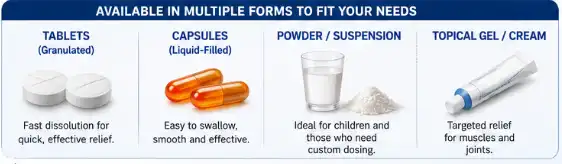
Comparative Analysis: Ibuprofen Powder vs. Tablets and Other Forms
Procurement workers can match the right product form to the right application by knowing how the different forms of ibuprofen compare. Each style has its own benefits when it comes to how quickly it dissolves, how hard it is to make, and how well patients accept it. The type of drug (powder, pills, capsules, or liquid) should be chosen based on the target population and the treatment goals.
Dissolution Kinetics Across Formulation Types
With 90% of the drug released within 15 minutes in artificial stomach juice, pure ibuprofen in powder form mixed in suspension vehicles gets the fastest absorption rates. However, the bitter taste and problems with stability mean that direct powder use is limited to mixed products or specific uses. Tablets are convenient and accurate for doses, but they vary a lot depending on the technology used to make them. Liquid-filled soft gelatin pills with ibuprofen soaked in polyethylene glycol work about average; they dissolve 80% of the way in 20 to 25 minutes. Topical creams work locally to reduce inflammation without affecting the whole body. They are useful in certain situations where taking medicine by mouth is not an option.
Safety and Dosage Considerations for Special Populations
Formulations for kids need extra care when it comes to giving them correctly and tasting good. Ibuprofen solutions with micronized API ibuprofen powder form mixed in tasty syrups make it possible for kids over six months to get the right dose of mg/kg. The FDA-approved amount for children is between 5 and 10 mg/kg every 6 to 8 hours. This means that formulas must keep the solution homogeneous over time. Granulated pills that break down quickly with little water are helpful for older people who have trouble swallowing. Manufacturers need to test how well their products dissolve across a pH range of 1.2 to 7.4 to make sure that the absorption rate stays the same, even as people's digestive systems change with age.
Stability and Shelf Life Impact on Supply Chain
Form has a big effect on how long something needs to be stored and when it goes bad. When kept in a dry, cool place and properly sealed, our ibuprofen powder form stays 98% pure for two years when it is packed in 1 kg aluminum foil bags or 25 kg drums. Because they have less surface area exposed to air and moisture, compressed pills are more stable. According to ICH standards, stability testing shows that pills that are properly made keep their breakdown profiles and effectiveness for 36 months at room temperature. Capsules with liquid fillings need stricter storage rules, which could limit their availability to supply chains that keep temperatures stable. These things have a direct effect on the total cost of ownership for buying managers who have to balance how well a product works with how much it costs to ship.
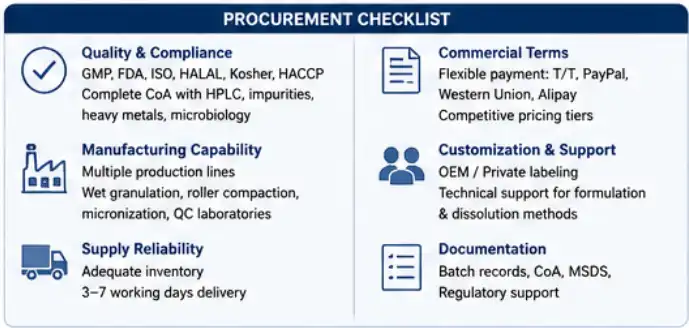
Procurement Insights for Ibuprofen Powder and Granulated Drugs
To choose a source for an ibuprofen API and finished dose forms, you need to carefully look at their skills, quality systems, and business terms. The global pharmaceutical supply chain needs suppliers who can meet strict legal standards, offer reasonable prices, and make sure their processes are reliable.
Quality Standards and Certification Requirements
The evaluation of suppliers is based on GMP approval. The places that make ibuprofen API (in powder form) have to follow current Good Manufacturing Practices and have quality control systems, testing methods, and full batch records that are written down. Certificates of Analysis should show that the product (in powder form) is at least 98% pure, as measured by HPLC, and include limits for heavy metals, linked substances, and microbes. Depending on the market they are trying to reach, international buyers need proof that the product (in ibuprofen powder form) meets FDA registration, ISO 9001, HALAL, Kosher, and HACCP requirements. Suppliers like Guangzhou Jben Biotechnology Co., Ltd. keep these certifications up to date across three production lines in GMP-compliant workshops that are backed by two separate labs. This makes sure that quality is always checked.
Evaluating Manufacturing Capabilities and Scale
Production capacity has a direct effect on how reliable the supply is and how flexible prices can be. Manufacturers with various production lines can handle both small research orders (starting at 1 kg) and large business orders that go over 10 metric tons per month. Technical skills are also important. A supplier's wet granulation, spray-drying, and micronization tools determine the unique products they can make. Site checks should look at how often equipment is maintained, how changes are controlled, and how much of the facility's capacity is being used. Vendors that show 60–70% utilization stay flexible for pressing orders and avoid the quality risks that come with operations that are too busy.
Commercial Terms and Customization Options
Payment freedom affects how you handle your working capital. Suppliers who accept bank transfers, PayPal, Western Union, and Alipay are flexible with how customers want to pay. Just-in-time stocking methods are possible with delivery times of 3–7 working days after payment proof. This lowers the cost of the building. Distributors who are making their own brand-name products can benefit from OEM and private labelling services. As a strategic partner instead of a transactional seller, suppliers who offer technical help during formulation development, such as dissolution method transfer and stable protocol design, set themselves apart. The framework deals with setting price tiers based on yearly amounts that should be negotiated by procurement managers. This will make sure that costs are predictable across fiscal years.
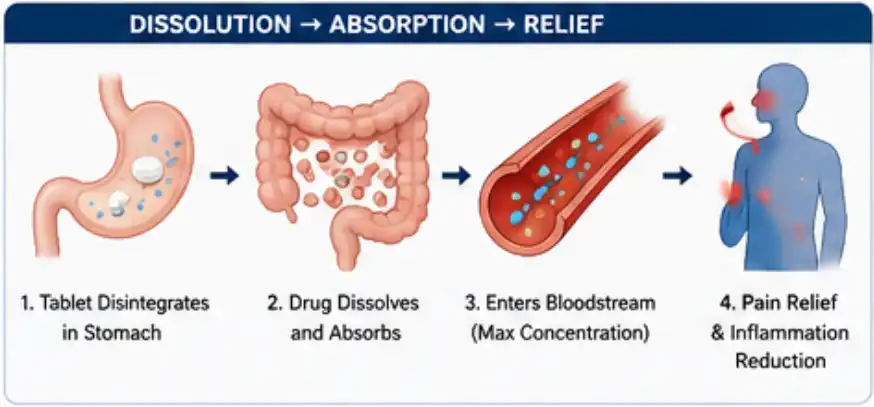
Future Trends in Ibuprofen Drug Formulations and Procurement
Ibuprofen product development is still being changed by new pharmaceutical technologies. This is because customers want faster pain relief, and makers want to make their products stand out. New technologies offer better breakdown performance while also answering worries about sustainability along the whole supply chain.
Advanced Manufacturing Technologies
Batch handling has been replaced by continuous production, which is a big change. Integrated systems that mix, granulate, and table in a constant flow cut the time it takes to make something from days to hours and make the process more consistent. Real-time release testing with near-infrared spectroscopy lets you check the quality right away, which speeds up the time it takes for new formulas to hit the market. When suppliers invest in these technologies, they help buying partners by making them quicker and more consistent from batch to batch. Three-dimensional printing of customized dosage forms is currently only used for a few specific tasks. However, in the future, it may be possible to make ibuprofen amounts that are tailored to each patient's unique metabolic profile on demand.
Market Demand for Enhanced Delivery Systems
The popularity of fast-acting forms is growing, as shown by the rise in sales of ibuprofen liquid gels and rapid-release pills. The longer lead times of these goods justify their higher prices. To keep up with this trend, drug firms need API providers that can make ultra-fine ibuprofen powder forms and help with product development. Combination goods that combine ibuprofen with painkillers or coffee create new market niches. To prepare for these changes, procurement plans need to build relationships with suppliers that can support innovation instead of just meeting orders for goods.
Digital Transformation in B2B Procurement
Digital tools make it easier to find suppliers, compare quotes, and handle orders, including for ibuprofen powder form. Online platforms that connect people who want to buy pharmaceuticals with approved API makers lower the costs of doing business and give people more ways to get their supplies than traditional networks. Blockchain-based supply chain tracking makes things clearer by letting buyers check where APIs came from and the authenticity of quality documents, including for ibuprofen in powder form. These technical tools are especially helpful for international buying because they make it easier to do due diligence across borders and lower communication obstacles. As younger procurement workers who are familiar with e-commerce models take on leadership roles, suppliers who offer combined digital buying systems will be in a good position.
Conclusion
The main difference between regular and granulated ibuprofen pills is how well they dissolve. Granulated forms have better release patterns that improve absorption and therapeutic start. When buying things, people who work in procurement have to look at preparation methods, seller skills, and business terms while keeping legal standards and market positioning goals in mind. The pharmaceutical business is moving toward more advanced manufacturing and digital purchasing, which means that API providers and end product makers can work together in a smart way. To make sure the supply chain stays stable and meets the growing demand for high-performance painkillers, companies should choose providers with strong quality systems, flexible production options, and expert support resources.
FAQ
1. Is ibuprofen powder safe for pediatric use?
The FDA says that kids over six months old can take 5–10 mg/kg of ibuprofen powder form every six to eight hours. It must be mixed with the right kind of liquid. For exact doses and a good taste, the powder itself needs to be pharmaceutically compounded with the right excipients. Dosing mistakes are likely when bulk powder is given directly, so it's not a good idea.
2. How does the onset time compare between powder and tablet forms?
Ibuprofen solutions made from micronized powder reach their highest plasma levels in 45 minutes, while regular pills take 1.5 to 2 hours. At around 60 minutes, granulated pills work about average. In hospital settings where quick pain relief is important, these differences are important.
3. What shelf life can be expected for ibuprofen powder?
Pharmaceutical-grade ibuprofen in powder form that is kept in dry, cool places in sealed cases for 24 months stays 98% pure. According to ICH standards, stability testing shows that there isn't much degradation when the substance is kept away from wetness and too much heat. Because they are coated to protect them and have less surface area exposed, tablets usually have a shelf life of 36 months.
Partner with Jben for Reliable Ibuprofen Powder Form Supply
Guangzhou Jben Biotechnology Co., Ltd. is the best place to get high-purity ibuprofen API and custom preparation services. Every batch of ibuprofen powder form meets international standards, including FDA, ISO, HALAL, HACCP, and Kosher certifications, thanks to our GMP-certified facilities' three specialized production lines and two separate quality control laboratories. We keep a lot of merchandise on hand so that orders can be filled quickly. We send within 3–7 business days, and we offer a variety of payment methods, such as wire transfer, PayPal, and Western Union. Whether you need 1 kg for testing or tons for business use, our technical team can help you reach your formulation goals by giving you expert advice on how to improve dissolution and make sure you're following all the rules. Check out how our ibuprofen powder form (CAS 15687-27-1), which comes in safe metal foil bags or drums, can help your product line. You can email our sourcing experts at xxx817488@gmail.com or go to jbenbio.com to get technical data sheets and talk about your needs with a reputable ibuprofen powder form maker who wants you to succeed.
References
1. Shah, R.B., Tawakkul, M.A., Khan, M.A. (2008). "Comparative Evaluation of Flow for Pharmaceutical Powders and Granules." AAPS PharmSciTech, 9(1), 250-258.
2. Nokhodchi, A., Javadzadeh, Y., Siahi-Shadbad, M.R., Barzegar-Jalali, M. (2005). "The Effect of Type and Concentration of Vehicles on the Dissolution Rate of a Poorly Soluble Drug (Indomethacin) from Liquisolid Compacts." Journal of Pharmacy and Pharmaceutical Sciences, 8(1), 18-25.
3. Rasenack, N., Müller, B.W. (2002). "Dissolution Rate Enhancement by In Situ Micronization of Poorly Water-Soluble Drugs." Pharmaceutical Research, 19(12), 1894-1900.
4. Leuner, C., Dressman, J. (2000). "Improving Drug Solubility for Oral Delivery Using Solid Dispersions." European Journal of Pharmaceutics and Biopharmaceutics, 50(1), 47-60.
5. Banker, G.S., Rhodes, C.T. (2002). "Modern Pharmaceutics, Fourth Edition." Marcel Dekker, New York, Pharmaceutical Dosage Forms and Drug Delivery Systems.
6. Yu, L.X., Amidon, G.L., Polli, J.E., Zhao, H., Mehta, M.U., Conner, D.P. (2002). "Biopharmaceutics Classification System: The Scientific Basis for Biowaiver Extensions." Pharmaceutical Research, 19(7), 921-925.