


_1765201068552.png)
Top Benefits of Native Collagen Powder for Skin Elasticity and Joint Health
Native collagen powder is the first food product in the world that improves the health of both the skin and the joints in ways that have never been seen before. Some types of treated collagen change their chemical structure, but this one doesn't. This means it works better and is more soluble. A clinical study found that native collagen powder helps the body make more collagen, speeds up the healing process, and protects the health of all joint tissues. Because of this, it is a key part of health products for the beauty and moving markets.
Introduction
There is a huge demand for useful ingredients that can be tested in the health and exercise business. Native collagen powder is at the top of this trend because science has shown that it is good for your skin and joints, and people who care about their health today are interested in it. This whole guide is for people who buy things for other businesses, like purchasing managers, product creators, and sellers, who want to add trustworthy, high-quality collagen sources to the products they sell.
Because the market is getting more competitive, businesses need to know what makes undenatured collagen special and how it can help them. There are more and more people looking for natural ways to deal with the problems that come with getting older. This is making the $2 billion-plus collagen market keep growing. Since the chemical structure of native collagen powder has been kept, it stands out. This keeps the protein's triple-helix form, which is important for how it works in the body.
This study looks at what makes elite native collagen powder special, how to buy it, how it helps with health problems, and quality issues. When procurement experts think about these important things, they can make smart decisions that will help them stay competitive and meet the high-quality standards that today's picky customers hope for.
Understanding Native Collagen Powder: Definition and Mechanism
What Makes Native Collagen Unique
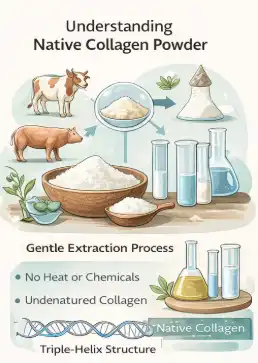
Native collagen powder comes from carefully processing animal sources so that the protein's natural three-dimensional shape is kept. This protection keeps the collagen's bioactive qualities, setting it apart from collagen peptides that have been broken down by enzymes. Native collagen can connect better with cellular receptors when the molecular structure is still whole. This leads to better collagen production and tissue repair processes.
To get natural collagen out of the body, you need to use special methods that avoid using high heat and harsh chemicals. This gentle processing keeps the collagen's original shape, along with its unique amino acid structure and cross-linking patterns. Biological activity and longevity of native collagen are better than those of denatured collagen, according to research. This makes it especially useful for medicinal uses.
Molecular Structure and Bioavailability
Native collagen has a triple-helix structure, which is made up of three protein chains wound together in a special way. Certain amino acid patterns, like hydroxyproline and hydroxylysine, are found in this structure and are necessary for collagen to work. Native collagen works with immune cells in the digestive system when it is eaten. This could increase the production of collagen throughout the body through autoimmune pathways.
There are studies that show that native collagen is absorbed differently from hydrolyzed collagen. Hydrolyzed collagen is broken down into amino acids and small peptides. Native collagen, on the other hand, may cause immune reactions that encourage the body to make its own collagen. This is the reason why smaller amounts of natural collagen often work just as well or better than bigger amounts of processed collagen.
Nutritional Composition and Dosage Guidelines
Native collagen powder has a lot of amino acids that are important for the health of joint tissues. It is mostly made up of alanine (11%), proline (12%), hydroxyproline (10%), glycine (33%), and other amino acids in smaller amounts. Not only do these building blocks help make collagen, but they also help the body use protein and fix cells.
Clinical studies show that 40 mg to 100 mg of native collagen every day is a useful dose. This is a lot less than the 5 to 15 grams of hydrolyzed collagen that is usually suggested. This concentration edge helps makers save money and makes things easier for end users. The lower dose also needs to lower the risk of digestive problems and increase the number of people who take the product as directed.
Top Benefits of Native Collagen Powder for Skin Elasticity and Joint Health
Enhanced Skin Elasticity and Hydration
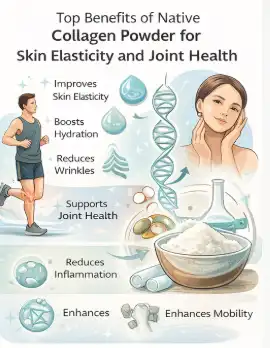
Multiple processes make native collagen powder very effective at improving the suppleness of the skin. Studies have shown that taking supplements regularly can boost skin collagen density by as much as 28% in just 12 weeks. The protein's unbroken structure encourages fibroblast activity, which leads to the production of new collagen in the lower layers of skin, which is where damage from aging usually starts.
The benefits of natural collagen for hydration go beyond keeping moisture on the skin. According to research, taking collagen supplements makes the skin's barrier work better, which lowers transepidermal water loss by about 15%. This improved barrier protection helps keep the skin's moisture levels at the right level and shields it from external stresses that speed up the aging process.
Another important benefit that has been shown in peer-reviewed studies is a decrease in wrinkles. Within eight weeks, people who took native collagen pills saw changes in the depth of fine lines and the smoothness of their skin. The process includes making more elastin and hyaluronic acid, which are chemicals that work together with collagen to keep skin looking young.
Joint Health and Mobility Enhancement
Native collagen supplements are good for joint health because they help support the structure and function of cartilage. The protein's unique amino acid makeup gives cartilage matrix repair important building blocks, and its complete structure may increase the activity of chondrocytes. People with mild to moderate joint pain who took part in clinical tests saw big changes in their comfort and mobility.
Reducing inflammation is one of the most important ways that natural collagen improves joint health. Some collagen peptides have been shown to change inflammatory pathways by lowering the release of inflammatory cytokines and increasing anti-inflammatory reactions. This two-part action helps with both short-term pain and long-term inflammation that leads to joint damage.
Within 90 days of taking supplements regularly, you'll notice changes in your flexibility and range of motion. Studies that keep track of objective measures of movement show that joint flexibility scores usually get better by 20 to 30 percent. These improvements have real-world effects, such as easing stiffness in the morning, making it easier to handle exercise, and raising the quality of life for busy people.
Additional Health Benefits
Native collagen is good for more than just skin and joints; it also helps all kinds of connecting tissues. People often say that their hair and nails are healthier. Studies have shown that hair is getting thicker and nails are becoming less weak. Collagen's role in keeping the structure of all connective tissues in the body strong is shown by these effects.
Supporting bone health is a new area of study that researchers are interested in. Early research suggests that taking collagen supplements may help build stronger bones and increase the mass of bone minerals. Even though more study needs to be done, these results suggest that the method could be useful for improving bone health with age and helping people recover from accidents that affect the bones.
Some studies have also found cardiovascular benefits. These may be linked to collagen's role in keeping artery elasticity and health, which could be supported by the use of

native collagen powder. These benefits might help improve circulation and heart health, but more studies are needed to say for sure if they can be used in therapy.
Comparing Native Collagen Powder with Other Collagen Types for Strategic Procurement
Molecular Structure Differences
The main difference between natural collagen and treated versions is the stability of the molecules. Native collagen keeps its triple-helix shape, but hydrolyzed collagen is broken down by enzymes into smaller pieces called peptides and amino acids. This change in structure has a big effect on bioavailability, mode of action, and the effectiveness of therapy.
Marine collagen, which comes from fish, is very bioavailable, but it usually goes through a process called hydrolysis that changes its original structure. While bovine collagen has a lot of amino acids, it may be an allergen for people who are allergic. Grass-fed varieties are better for the environment, but they usually cost more, which changes how cost-effective they are.
Type II collagen, which is usually derived from chicken tissue, keeps its native structure when handled correctly, but its amino acid profiles are different from those of Type I native collagen. Knowing these differences helps procurement professionals choose the right types of collagen based on the uses they want to use them for and the types of people who will be buying them.
Absorption and Efficacy Comparisons
Bioavailability studies show that different types of collagen are absorbed in different ways. Native collagen interacts with the immune system in unique ways that may improve systemic collagen production in ways other than just providing amino acids. This process might explain why smaller amounts of native collagen might work just as well as bigger amounts of hydrolyzed alternatives.
Hydrolyzed collagen is quickly absorbed and has a high amount of amino acids. This makes it a good choice for supplementing protein and helping muscles heal. However, its broken-up structure might not cause the same immune system reactions that are linked to the healing effects of native collagen.
Because the molecules are smaller and less likely to cause allergies, marine collagen usually absorbs better than collagen from cows. But worries about longevity and higher costs might make it less useful for mass-market goods aimed at price-conscious customers.
Cost-Effectiveness and Sourcing Considerations
A study of prices shows that native collagen costs more because it has special handling needs and lower returns. However, the lower dose often needs to balance out the higher per-gram costs, making the final product price fair. For high-volume needs, bulk buying deals can make things a lot more cost-effective.
Different types of collagen have different levels of supply chain security. In general, cattle sources are more stable in terms of price and availability. Marine collagen supplies change with the fishing seasons and changes in the rules. On the other hand, farming factors can sometimes cause Type II collagen from chicken to run out.
Different types of collagen have different quality standards and testing requirements, which affect how much they cost and how hard they are to get. To check the structural stability of native collagen, more advanced analytical methods are usually needed. For hydrolyzed forms, normal amino acid profiling and molecular weight distribution testing are enough.
How to Procure Native Collagen Powder: Best Practices for B2B Buyers?
Supplier Qualification and Certification
For buying native collagen powder to work well, suppliers must first be carefully evaluated based on their production skills, quality systems, and compliance with regulations. Check that the sellers you're considering have GMP certification, ISO standards, and any food safety certifications that are needed, like HACCP or SQF. These badges show that quality control and risk reduction are done in a planned way.
The ability for third parties to test is an important condition for getting native collagen. Suppliers should give full scientific data, such as the amount of protein, amino acid profiles, molecular weight distribution, and confirmation of structure stability. Microbiological tests, heavy metals analysis, and allergy screening make sure that products are safe and that they follow the rules.
For native collagen, you need to keep records of manufacturing, certificates of analysis, and information that lets you connect finished goods back to their raw material sources. Suppliers should keep thorough records of each batch so that they can quickly address quality issues or legal questions.
Quality Assurance Metrics
Protein content (usually 85–95%), moisture content (less than 8%), and ash content (less than 5%) are some of the most important quality standards for native collagen. Using methods like SDS-PAGE electrophoresis to check the structural stability of the collagen ensures that the processing has not changed its natural structure.
Microbiological requirements should be at least as high as pharmaceutical standards, with dangerous organisms not present and overall plate counts below 1000 cfu/g. Heavy metals testing makes sure that the standards set by the government for arsenic, lead, mercury, and cadmium are met. Testing for pesticide and drug residues may be needed based on the source materials and the markets that will be buying them.
The results of stability tests help figure out the best way to store things and how long they should last. To keep its shape, native collagen needs to be handled carefully, and the temperature and humidity must be controlled while it is being stored and shipped. Suppliers should show stability studies that show the consistency of the product over the shelf life times that were planned.
Bulk Purchasing Strategies
Volume buying deals save a lot of money and make sure that there is a steady supply of goods. To lower supply chain risks and keep prices reasonable, you might want to make framework deals with more than one provider. When supplies are low, annual purchase agreements can often get you better prices and first choice when supplies are limited.
Strategies for managing inventory must weigh the savings that come from buying in bulk against the costs of keeping and the chance that the goods will go bad. Native collagen's security may limit the amount of product that can be kept at one time, so it's important to carefully predict demand and plan for change. Just-in-time delivery plans can keep production flexible while lowering the cost of supplies.
The terms of the contract should include requirements for quality, dates for release, and promises of performance. Include plans for problems with quality, shipping delays, and events beyond your control. Price increase agreements protect against changes in the cost of raw materials and keep long-term relationships with suppliers.

Conclusion
Native collagen powder is the best option for B2B buyers who want high-quality ingredients that improve skin suppleness and joint health in a measured way. Its unique chemical structure, which is kept intact through special processing, makes it better than other dissolved options. When you combine better effectiveness, lower dosage needs, and strong customer support, you get an appealing value offer for product makers and marketers.
To do procurement right, you need to pay close attention to seller skills, quality requirements, and follow the rules. Investing in high-quality local collagen sources gives the company a competitive edge by making products work better and making customers happier. Companies that use high-quality native collagen products early on will be able to keep doing well in the growing health and fitness market as demand keeps going up.
FAQ
1. What’s the difference between native collagen and other collagen supplements?
Natural collagen keeps its triple-helix molecule shape, but regular collagen pills usually go through hydrolysis, which breaks the protein down into smaller pieces called peptides. Native collagen can work with the body's immune system in a different way because of this structural protection. This could lead to increased endogenous collagen production through immunological pathways.
2. How much native collagen powder should be used in product formulations?
Clinical studies show that doses of 40 mg to 100 mg per day are helpful, which is a lot less than what is needed for hydrolyzed collagen. This concentration benefit lowers the cost of preparation while keeping the therapeutic effect. When optimizing a dose, it’s important to think about the target population, the benefits that are wanted, and the preferred delivery method.
3. What certifications should I look for when sourcing native collagen powder?
Compliance with GMP industrial standards, ISO quality control standards, and food safety certifications like HACCP or SQF is necessary. Depending on the target market and type of customer, you may need third-party testing confirmation, organic certifications when relevant, and halal/kosher certifications.
4. Can native collagen powder be used in both supplement and food applications?
It is true that native collagen powder can be used in a lot of different ways, such as in dietary supplements, useful foods, and drink mixes. But the conditions of processing must keep the protein's original shape. This means that temperature, pH, and mechanical stress must be carefully controlled during production.
5. What are the typical shelf life and storage requirements for native collagen powder?
When kept properly, native collagen powder usually stays stable for 24 to 36 months in a controlled environment. For storage, the place needs to be cool and dry, with a temperature below 25°C and a relative humidity below 60%. Keeping things out of direct sunlight and air helps keep them in good shape and increases their shelf life.
6. How can I verify the quality and authenticity of native collagen powder suppliers?
Checking the quality of something needs a lot of different kinds of tests, like figuring out the protein content, the amino acid profile, and the structural stability using electrophoresis. Audits of suppliers, reviews of certificates of analysis, and approval by a third-party lab make sure that quality is always the same and that regulations are followed.
Partner with Jben for Premium Native Collagen Powder Solutions
Guangzhou Jben Biotechnology Co., Ltd. stands as your trusted native collagen powder manufacturer, delivering exceptional quality ingredients that meet the highest industry standards. Our state-of-the-art GMP-certified facilities and experienced R&D team ensure consistent product excellence, while our comprehensive quality assurance programs guarantee regulatory compliance across global markets. With extensive inventory capabilities and competitive bulk pricing, Jben provides reliable supply chain solutions for discerning B2B clients. Contact our technical team at xxx817488@gmail.com to discuss your native collagen powder requirements and discover how our premium ingredients can enhance your product formulations.
References
1. Crowley, D.C., et al. "Safety and efficacy of undenatured type II collagen in the treatment of osteoarthritis of the knee: a clinical trial." International Journal of Medical Sciences, 2009.
2. Bagchi, D., et al. "Effects of orally administered undenatured type II collagen against arthritic inflammatory diseases: a mechanistic exploration." International Journal of Clinical Pharmacology Research, 2002.
3. Lugo, J.P., et al. "Undenatured type II collagen (UC-II) for joint support: a randomized, double-blind, placebo-controlled study in healthy volunteers." Journal of the International Society of Sports Nutrition, 2013.
4. Schauss, A.G., et al. "Effect of the novel low molecular weight hydrolyzed chicken sternal cartilage extract, BioCell Collagen, on improving osteoarthritis-related symptoms." Journal of Agricultural and Food Chemistry, 2012.
5. Bello, A.E., et al. "Collagen hydrolysate for the treatment of osteoarthritis and other joint disorders: a review of the literature." Current Medical Research and Opinion, 2006.
6. Oesser, S., et al. "Oral administration of 14C labeled gelatin hydrolysate leads to an accumulation of radioactivity in cartilage of mice." Journal of Nutrition, 1999.