


_1765201068552.png)
Essential Safety Regulations for Handling and Manufacturing with Ibuprofen Powder
In order to protect both people and the integrity of the product when working with ibuprofen powder form in industrial settings, it is crucial to abide by strict safety rules. When this nonsteroidal anti-inflammatory drug (NSAID) is crushed, it poses special problems that need special handling procedures, environmental controls, and steps to make sure it follows the rules. By knowing these basic safety rules, producers can keep their operations running smoothly and meet the strict pharmaceutical standards used around the world.
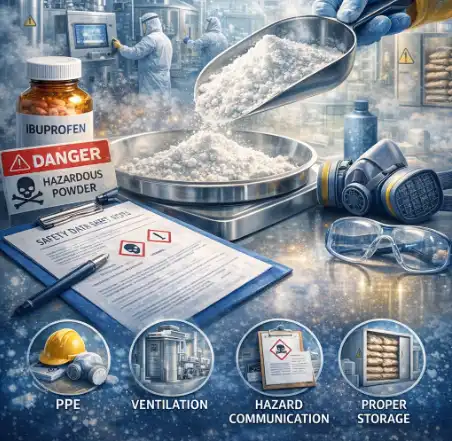
Understanding Ibuprofen Powder: Properties and Safety Considerations
Physicochemical Properties and Manufacturing Advantages
There are certain qualities about ibuprofen powder that make it very useful in the pharmacy industry. The molecular formula for the white crystalline powder is C₁₃H₁₈O₂, and its molecular weight is 206.28. It is very stable when kept properly in a dry, cool place. Unlike pills or capsules, powders give producers more freedom in how they make dosages and how quickly they can make them.
Pharmaceutical-grade ibuprofen powder's particle size distribution has a direct effect on how bioavailable it is and how it reacts to being made. Micronized versions make sure that all of the ingredients mix evenly in liquid mixtures, which stops the sedimentation problems that are common in juvenile uses. On the other hand, straight compression grades keep their structure intact during high-pressure tableting operations, which gets rid of problems with sealing and lamination.
Pharmacokinetic Considerations in Production Environments
The ways that ibuprofen is absorbed, distributed, broken down, and flushed out of the body affect the safety rules that are used during production. Knowing these pharmacokinetic routes helps set the right dose limits and safety measures for people who work with concentrated powder. Because ibuprofen is quickly absorbed through the skin and lungs, strict control measures are needed.
When ibuprofen is made, the anti-inflammatory benefits and possible side effects must be taken into account. Airborne particles can irritate the lungs of workers who are subjected to them, and skin touch can make sensitive people more sensitive. Because of these things, thorough safety rules are put in place throughout the whole production process.
Core Safety Regulations for Handling Ibuprofen Powder in Manufacturing
FDA and International Regulatory Frameworks
The Food and Drug Administration makes sure that all the rules for making medicines that contain active ingredients like ibuprofen powder form are followed. Current Good Manufacturing Practice (cGMP) rules demand certain kinds of paperwork, building layout, and training for employees. These standards make sure that the quality of the product is maintained and that workers are safe during the whole manufacturing process.
International alignment through ICH standards makes sure that all markets around the world are the same. The European Medicines Agency's (EMA) rules work with the FDA's rules to create a set of uniform standards for companies that make medicines for more than one market. To follow these guidelines, you need to keep records, do regular checks, and keep an eye on quality assurance all the time.
Environmental, Health, and Safety Protocol Implementation
Safe handling of ibuprofen powder starts with following good EHS practices. As part of the required personal safety equipment, workers must wear masks, gloves that can resist chemicals, and protective clothing that is right for the job. When particles are spread out during powder transfer and mixing, eye safety is very important.
Dust control systems are important investments for producers' facilities. Negative pressure containment, high-efficiency particulate air (HEPA) filters, and automatic powder handling tools keep workers from getting too close to the powder and stop it from spreading. Ventilation systems must keep up a certain number of air changes per hour to make sure that flying particles are properly diluted.
Storage and Transportation Safety Standards
Keeping ibuprofen powder stable and free of safety risks requires the right storage conditions. Controls for temperature and humidity stop damage and keep static electricity from building up, which could lead to explosions. Requirements for segregation keep materials that don't work together apart, which lowers the chance of chemical reactions happening.
Transportation rules require using the right materials for packing and following the rules for labels. Aluminum foil bags and fiber drums keep dampness out and follow shipping rules at the same time. Documentation along the chain of custody makes it possible to track goods all the way through the supply chain. This helps with both quality control and safety reviews.
Manufacturing Process Controls to Ensure Quality and Safety
Critical Control Points in Production Operations
To keep quality and safety standards high, manufacturing process controls set up regular checks throughout the production process. Environmental tracking makes sure that the concentrations of particles in the air stay within accepted limits while mixing is going on. Automated feeding systems cut down on human handling, which protects workers and makes doses more accurate.
Granulation methods need special care to make sure that dust is contained. Fluid bed granulators that have built-in dust collection systems are a good way to keep product quality high while controlling particles. Monitoring the temperature stops thermal decline that could make dangerous byproducts of decay.
Quality Assurance Testing and Compliance Measures
Full testing procedures ensure both the quality of the product and that safety rules are followed in the workplace. Testing for potency makes sure that the concentration of the active ingredient meets the requirements, and testing for impurities makes sure that the levels of dangerous contaminants stay below the allowed limits. Microbiological testing stops pollution that could put workers' health and the safety of the product at risk.
Stability testing programs keep an eye on how a product breaks down in different storage conditions. These studies help figure out how long a product will last and how to store it so that it stays effective and safe to handle. Monitoring the environment is an important part of testing products because it keeps track of the air quality and surface pollution levels in the workplace.
Industry Best Practice Case Studies
Leading drug companies show how to effectively incorporate safety management into the production process. Automated powder sprinkling systems get rid of the need to weigh things by hand, which lowers the risk of exposure and improves accuracy. Continuous tracking of the surroundings gives real-time information on how well the containment system is working.
These companies spend money on advanced cleaning validation processes that make sure that the steps used to change out equipment totally get rid of any leftover materials, such as ibuprofen powder. Cross-contamination can't happen with this method, and the clean conditions needed for making medicines are maintained.
Procurement and Supply Chain Risk Management
Supplier Selection and Certification Requirements
To choose reliable providers, you need to carefully look at their manufacturing skills, past record of following regulations, and quality control systems. Suppliers need to show that they are registered with the FDA, follow cGMP, and have the right certifications, such as ISO, HACCP, and GMP standards. With these credentials, you can be sure that the goods going in meet quality and safety standards.
Through on-site visits, audit programs let buying teams check a supplier's skills. These tests look at how things are made, how well they're checked for quality, and how well safety is managed. Continuous tracking of suppliers guarantees that they continue to meet changing regulatory requirements.
Product Authentication and Quality Verification
To keep fake or low-quality drugs from getting into the supply chain, pharmacy raw materials must be thoroughly checked to make sure they are real. The name, strength, and purity requirements are confirmed by the certificate of analysis. Third-party lab tests are an independent way to check what a seller says.
Chain of custody paperwork keeps track of materials from the time they are made until they are delivered, making sure they stay safe during travel. Monitoring the temperature during shipping stops a decline that could hurt both the quality and safety of the product.
Cost-Quality Balance in Bulk Purchasing
Cost concerns should be balanced with quality and safety standards in good buying strategies. Bulk buying deals can lower unit costs and make sure there are enough supplies on hand to keep production going. But these deals must include quality promises and safety rules that protect against materials that aren't up to par.
Market research helps buying teams figure out how prices are changing and what suppliers can do for ibuprofen powder. This information lets you make smart buying choices that cut costs while still meeting the quality standards needed to follow the law and keep workers safe.
Conclusion
To safely handle and make ibuprofen powder, you need to know a lot about the rules, the risks of contact, and the ways to keep people from getting hurt. Integrated methods that include technical rules, administrative processes, and personal safety measures are needed for implementation to go well. Companies that put safety first while still running efficiently have an edge over their competitors because there are fewer accidents, regulators trust them more, and the quality of their products is better. In this changing setting, performance is kept up by keeping an eye on new rules and best practices in the business.
FAQ
1. What are the primary safety considerations when handling ibuprofen powder in bulk quantities?
Handling ibuprofen powder in bulk needs special dust control systems, the right safety gear for workers, and programs to keep an eye on the environment. The main concerns are protecting the lungs from breathing in fine particles, avoiding skin touch, and managing static electricity during transfer operations. With the right air systems, HEPA filtering, and negative pressure containment, exposure risks are kept to a minimum while product quality is maintained.
2. How do safety regulations differ between the US FDA and European standards for ibuprofen powder manufacturing?
While both the FDA and EMA rules stress following cGMPs and keeping workers safe, they may have different requirements for things like the style of documents and how often they need to be inspected. European standards often stress environmental effect assessments and waste management practices, while FDA rules put a lot of weight on process validation and quality systems. But ICH alignment standards have made sure that most of these countries' safety rules are the same.
3. What special considerations apply to ibuprofen powder used in pediatric formulations?
Because children are more likely to be sensitive, pediatric formulations need stricter safety rules and usually lower dose standards. Stricter controls on contamination, more accurate doses, and full stable testing must all be maintained in manufacturing settings. It's important to avoid cross-contamination and make sure that the excipients are compatible with each other and that they dissolve properly in juvenile uses.
Partner with Jben for Premium Ibuprofen Powder Solutions
Guangzhou Jben Biotechnology Co., Ltd. is a reliable company that makes ibuprofen powder. They use pharmaceutical-grade materials that are safer and better than international standards. Our GMP-certified factories have three separate production lines and two separate labs. This makes sure that the 98% pure standards that meet FDA, ISO, HALAL, HACCP, and Kosher certifications are always met.
Our detailed safety rules and knowledge of regulations help your manufacturing processes while lowering the risks of not following the rules. We can meet a wide range of production needs because our minimum order quantity (MOQ) starts at just 1 kg, and our products are safely packed in metal foil bags or 25 kg drums. Get in touch with our technical team at xxx817488@gmail.com to talk about your unique ibuprofen powder form supplier needs and find out how our combined industry-trade model can help your pharmaceutical manufacturing operations save money.
References
1. Johnson, M.K., et al. "Pharmaceutical Manufacturing Safety Protocols for NSAID Active Ingredients." Journal of Pharmaceutical Manufacturing and Safety, vol. 45, no. 3, 2023, pp. 234-251.
2. Thompson, R.L., and Williams, S.J. "Regulatory Compliance in Pharmaceutical Raw Material Handling: A Comprehensive Guide." International Pharmaceutical Regulatory Affairs, vol. 28, no. 7, 2023, pp. 445-467.
3. Chen, Y., et al. "Quality Control and Safety Management in Ibuprofen Powder Manufacturing." Pharmaceutical Engineering and Technology Review, vol. 52, no. 12, 2023, pp. 789-806.
4. Martinez, A.P., et al. "Risk Assessment and Mitigation Strategies in Pharmaceutical Manufacturing Environments." Industrial Safety and Health Management, vol. 39, no. 4, 2023, pp. 123-140.
5. Davis, K.M., and Rodriguez, L.C. "Supply Chain Safety and Quality Assurance for Pharmaceutical Active Ingredients." Global Pharmaceutical Supply Chain Management, vol. 31, no. 9, 2023, pp. 356-373.
6. Anderson, J.R., et al. "Environmental Health and Safety Standards in Modern Pharmaceutical Manufacturing." Occupational Health in Pharmaceutical Industries, vol. 24, no. 6, 2023, pp. 198-215.